
Written by Todd Pomerleau, President, Mass Deportation Defense
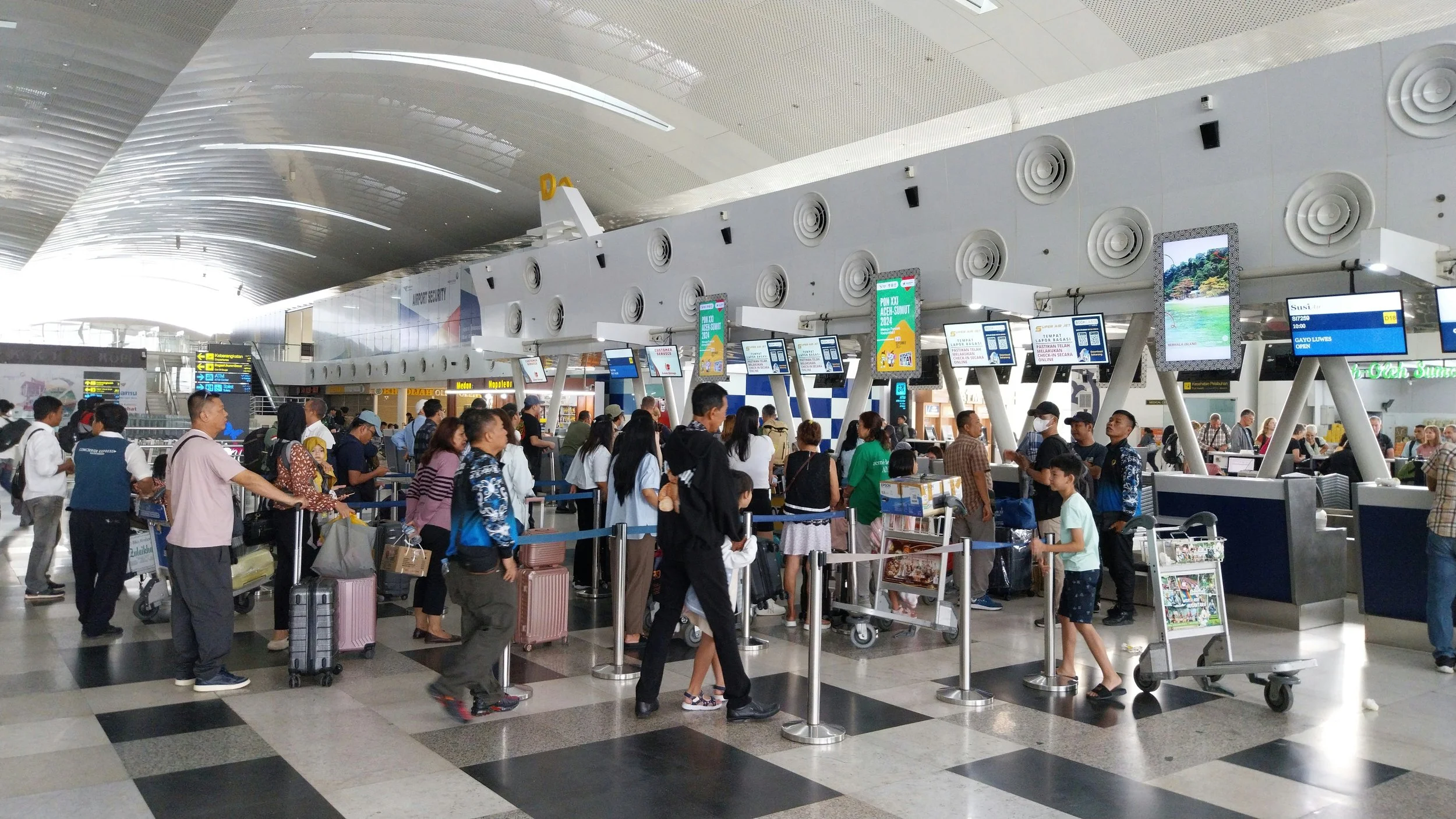
On October 30, a 23-year-old UC Berkeley business student was waiting to fly to Portland with her boyfriend when ICE agents arrested her at San Francisco International Airport. She had a pending asylum case and a valid work permit.
She spent more than a week at an ICE detention facility in the Mojave Desert. On November 9, a federal judge ordered her released (KQED).
She isn't our client, but her case is one more example of a pattern we're seeing again and again, and it isn't new. Airports have been an ICE enforcement zone for more than a year. In the last two months alone, I've worked on five airport detention cases, and our team has handled at least two dozen. I'm writing this so that students, asylum seekers, and families know how this happens and what their rights are before they get to the airport.
What we’re seeing at Logan Airport
These are not one-off stories. Here are a few of the airport cases our team has taken on.
Jemmy: green card holder, home from a family vacation
Jemmy came to the U.S. at age nine and had renewed her green card a month before the trip. When she landed at Boston Logan, Customs and Border Protection officers took her into custody. She was held for 10 days and hospitalized twice. DHS never told her why she was being held and never formally charged her. Read her story.
Eva: home from a brother's funeral, with a valid green card
Eva, a Rhode Island mother of six, flew to Cape Verde for her brother's funeral after an immigration office assured her she could return with her passport and green card. When she landed, CBP held her at Logan for 13 days without charges. She then spent several weeks detained in Maine before our team was able to secure her release (WBUR).
Maria: DACA renewal pending, arrested after a concert
Maria came to the U.S. from Colombia at age four and applied to renew her DACA three years ago. On July 10, after a Noah Kahan concert at Fenway Park, ICE arrested her at Logan over a 2017 deportation order she says she never knew about. We filed a habeas petition the next day, and a federal judge ordered her released after ten days (WBUR).
David: pending asylum case, every court date kept
David, a Seattle DJ from Venezuela, flew to Boston for a World Cup match. ICE arrested him at Logan the next morning, even though his asylum case is still pending and he says he has never missed a court date. He spent three weeks in custody before his release on July 31 (KIRO 7).
Daury: medical emergency puts a DACA recipient's status in jeopardy
Daury grew up in Boston and has DACA. He was flying home from Puerto Rico, a domestic flight that needs no passport, when a medical emergency on board diverted the plane to Bermuda. When it finally reached Boston, CBP held him for more than 24 hours, treating him as if he had left the country by choice (WCVB).
How ICE knows you're flying
Most coverage of these arrests leaves out the part that matters most: they aren't random. A data pipeline is driving them.
Since early 2025, the Transportation Security Administration has sent ICE lists of upcoming air travelers several times a week. ICE checks those names against its own records of people with deportation orders (The New York Times, via The Spokesman-Review).
When there's a match, an ICE office called the Pacific Enforcement Response Center, or PERC, sends local officers the person's flight number, departure time, and photo, sometimes just hours before takeoff. Internal documents show PERC flagged the flight of Any Lucía, the Babson College student our team represents, before she was arrested at Logan and deported to Honduras.
This is why I tell people to think about their records before they book. If ICE's database shows an old removal order, even one you never received, booking a ticket can be what flags you. Maria didn't know about her 2017 order until agents met her at the gate.
“I strongly urge noncitizens NOT to travel on a plane (foreign or domestic) without talking to a competent lawyer first. Customs and Border Protection is taking DNA samples and going through phones and computers without warrants and preventing access to counsel. Don’t fly the unfriendly skies!”
Can ICE arrest you on a domestic flight?
Yes. Most of the cases above involved domestic flights. The Berkeley student was going on vacation in Oregon. DHS has been open about its goal: “The only reason you should be flying is to self-deport home,” a spokesperson told The New York Times.
Anyone with an unsettled immigration status should think of an airport as an enforcement zone. That includes people with pending cases, expired visas or TPS, DACA renewals in process, or old court dates they may have missed.
Does a pending asylum case or work permit protect you from detention?
Not on its own, according to the government. In the Berkeley case, DHS said that work authorization or a pending asylum application does “NOT confer legal status in the United States.” In Maria's case, the government argued that a pending DACA renewal doesn't prevent deportation. We strongly disagreed, and the judge ordered her released.
This surprises many people. A work permit lets you work, and a pending asylum case means you're in the process. Neither one, by itself, stops ICE from trying to detain you.
What does protect you is the Constitution, and a lawyer who knows how to use it quickly.
What due process means if you're detained by ICE
DHS told reporters that detention is “a choice,” because immigrants can choose to self-deport. The federal judge disagreed.
Judge Dena Coggins found that ICE had failed to give the Berkeley student a “constitutionally compliant pre-deprivation bond hearing.” In plain terms: the government can't lock you up first and give you a chance to object later.
The judge ordered her released immediately, without restrictions like an ankle monitor, and ordered her passport and belongings returned.
What is a habeas petition, and how does it get people released?
Habeas corpus means “produce the body.” It is a centuries-old legal tool for challenging unlawful detention. A lawyer files a petition in federal court asking a judge to review whether the government is holding someone legally.
Habeas petitions are working. Federal courts across the country are rejecting the government's position and ordering bond hearings or release. As the Berkeley student's attorney put it, “Judges have been overwhelmingly finding these arrests by ICE to be unlawful and in violation of the Constitution.” In Maria's case, we filed the day after her arrest, and the court blocked ICE from moving her out of Massachusetts that same day.
Release matters beyond freedom itself. Outside detention, people can meet privately with their lawyers, gather evidence, and build a stronger case. They can go back to class, to work, and to their families.
Stand up for justice and due process. Everyone deserves notice and a fair hearing before the government takes away their freedom. Mass Deportation Defense is a 501(c)(3) nonprofit, and every habeas petition we file to defend that right takes time and resources. All donations are tax-deductible.

About Todd C. Pomerleau
Todd C. Pomerleau is Cofounder and President of Mass Deportation Defense, a Massachusetts nonprofit providing direct legal representation to noncitizens facing detention and deportation. He is a Partner and Chair of Impact Litigation at Rubin Pomerleau PC. He and his team have handled at least two dozen airport detention cases. He has practiced immigration law for more than 20 years.